

After an accident in Phoenix, one of the first practical questions is: “How long will this personal injury case take?”
The honest answer is that no single timeline fits every Arizona injury case. Some claims resolve in a few months after medical treatment is complete and insurance has enough records to evaluate the loss. Other cases take much longer because injuries are serious, medical care is ongoing, fault is disputed, evidence is missing, coverage is unclear, a public entity may be involved, or a lawsuit becomes necessary.
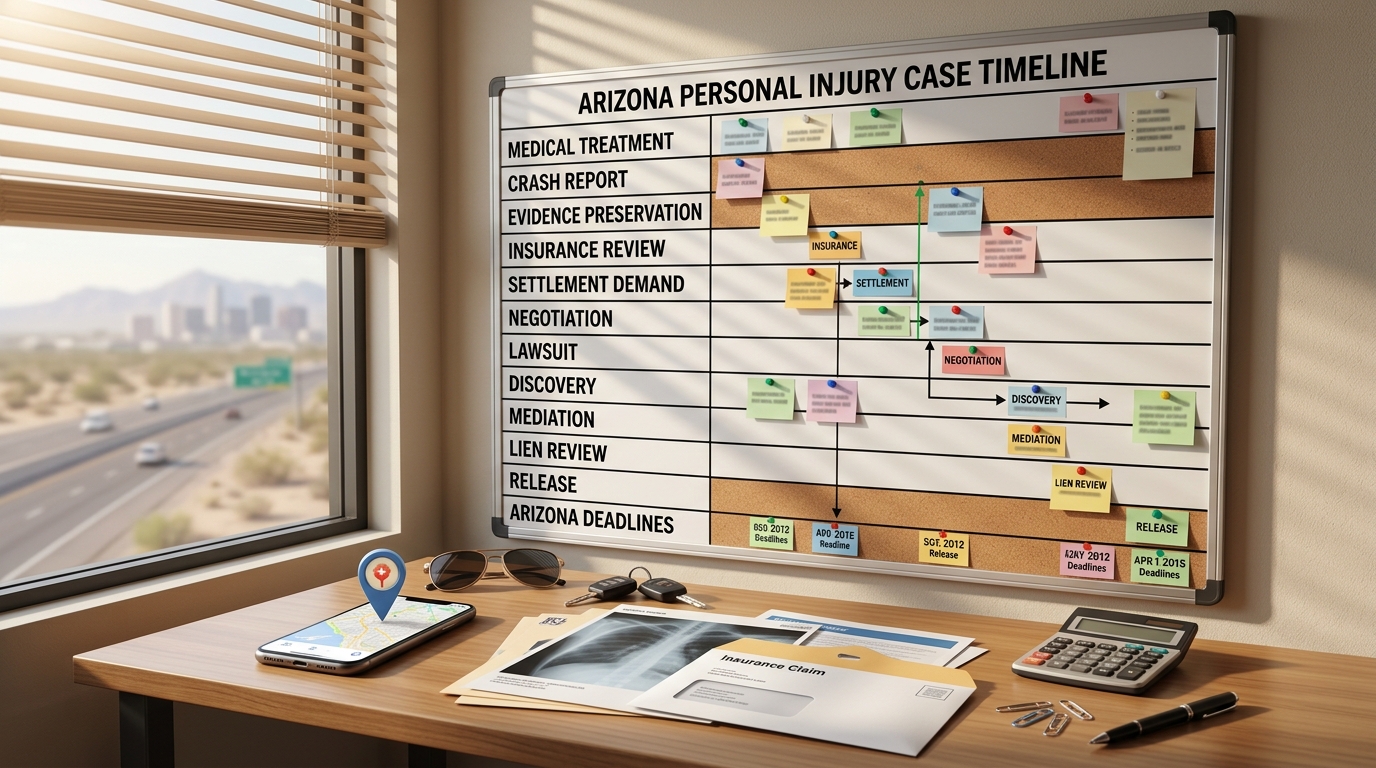
A personal injury case is not one clock. It is a command center with several timing tracks running at once: medical treatment, crash reports, evidence preservation, insurance review, demand preparation, negotiation, release review, liens, litigation, discovery, mediation, trial preparation, and Arizona deadlines.
This guide explains what affects the timeline of a personal injury case in Arizona, what can speed up or slow down a Phoenix case, and why settlement should not be rushed before the full injury picture is clear.
Quick Answer
A personal injury case in Arizona may take several months or longer depending on injury severity, medical treatment, crash or incident records, evidence, fault disputes, insurance coverage, policy limits, settlement negotiations, liens, and whether a lawsuit is filed. A simple claim with clear fault, completed treatment, complete records, and cooperative insurance may resolve faster. A serious injury case, disputed liability claim, commercial vehicle case, uninsured motorist issue, public-entity claim, or lawsuit may take much longer.
If you were injured in Phoenix and the timeline is unclear, speaking with a phoenix accident lawyer may help you understand what stage your case is in, what records are missing, and what Arizona deadlines may apply. You can also use the Thompson Law Phoenix profile as a local starting point for map access, profile details, and contact options.
Key Takeaways
- Arizona personal injury cases do not follow one fixed timeline.
- Medical treatment is often the largest timing factor because case value depends on diagnosis, bills, restrictions, prognosis, and future-care needs.
- Crash reports, incident reports, photos, witnesses, camera notes, insurance letters, repair records, and wage proof can affect how quickly a case can be evaluated.
- A lawsuit may add discovery, depositions, expert review, mediation, motions, trial preparation, and court scheduling.
- Public-entity claims may involve much shorter notice and filing rules than ordinary injury claims.
- A fast settlement is not always a good settlement if treatment, future care, liens, wage loss, coverage, or release language is unresolved.
The Arizona Case Timeline Command Center
Think of your case as a command center with multiple tracks.
| Timeline Track | What It Measures |
| Medical Track | Treatment, diagnosis, recovery, bills, restrictions, and future care |
| Report Track | Crash reports, incident reports, police records, and official documentation |
| Evidence Track | Photos, witnesses, camera footage, vehicle data, and property conditions |
| Insurance Track | Claim setup, coverage review, adjuster communication, and policy limits |
| Demand Track | Medical records, bills, wage proof, settlement package, and response timing |
| Negotiation Track | Offers, counteroffers, disputed facts, and claim valuation |
| Release Track | Settlement paperwork, release language, and final agreement terms |
| Lien Track | Medical balances, reimbursement claims, reductions, and final distribution |
| Lawsuit Track | Filing, service, discovery, depositions, mediation, and trial preparation |
| Deadline Track | Arizona limitation periods, public-entity notice rules, and filing dates |
Some tracks overlap. Medical care may continue while evidence is being preserved. Insurance review may begin before all bills arrive. A lawsuit may be filed while settlement talks continue if a deadline is approaching.
Track 1: The First Days After the Accident
The first days after an accident are usually not about settlement. They are about safety, medical care, and protecting the record.
Important early steps include:
- Getting medical care
- Calling police after a serious crash or injury event
- Photographing the scene, vehicles, hazards, injuries, or property condition
- Collecting driver, insurance, and witness information
- Looking for nearby cameras
- Saving receipts, tow records, and repair information
- Reporting the incident to insurance
- Keeping a record of insurance communication
- Writing down what happened while the details are fresh
Arizona DIFI advises drivers not to admit fault and not to discuss an accident with anyone except police and insurance representatives. That makes the early communication track important. Keep statements factual and avoid guessing about speed, distance, visibility, fault, injury severity, or future treatment.
Early documentation matters because missing proof can slow the case later.
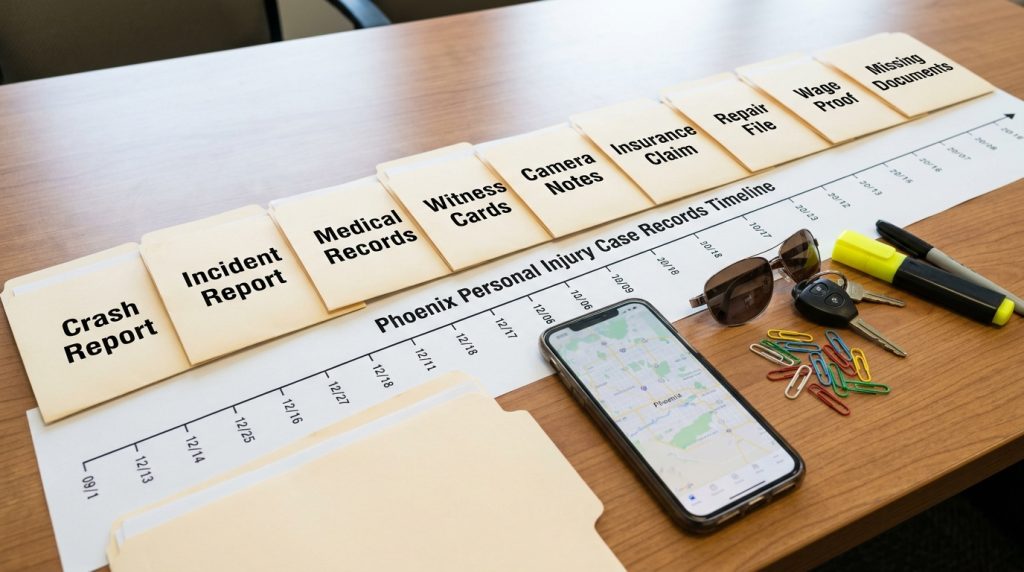
Track 2: Crash Reports and Official Records
For Phoenix motor vehicle crashes, official records may become one of the first key case documents.
Phoenix Police public-record materials list traffic crash records among public-record request types and direct users to the Police Public Record Request portal. ADOT also provides Arizona Crash Report forms and resources.
A crash report may help document:
- Accident date
- Accident time
- Crash location
- Drivers
- Vehicles
- Insurance information
- Reported injuries
- Witnesses
- Citations
- Contributing factors
- Officer observations
- Report number
For unsafe property injuries, ask whether the store, apartment complex, hotel, restaurant, parking garage, office building, event venue, or property manager created an incident report.
Save:
- Report number
- Responding agency
- Officer name, if known
- Crash date
- Crash time
- Crash location
- Driver and vehicle information
- Insurance information
- Witness information
- Citation details, if any
- Notes about how the report was requested
A missing report does not always stop a case, but it can delay insurance review if the insurer is waiting to confirm basic facts.
Track 3: Evidence Preservation
Evidence can disappear long before a case is ready to settle.
Time-sensitive evidence may include:
- Dashcam footage
- Business camera footage
- Apartment camera footage
- Gas station video
- Parking garage footage
- Hotel or restaurant cameras
- Doorbell camera video
- Rideshare app records
- Delivery app records
- Commercial vehicle camera data
- Vehicle black box data
- Truck electronic records
- Witness memories
- Damaged vehicle inspection
- Photos before repair
- Hazard photos before cleanup
- Incident reports
- Maintenance records
- Construction-zone conditions
Phoenix accident evidence can disappear quickly near I-10, I-17, Loop 101, Loop 202, State Route 51, US 60, downtown Phoenix, Roosevelt Row, Camelback corridors, Arcadia, Grand Avenue, Sky Harbor airport routes, hospital corridors, campuses, hotels, parking garages, apartments, retail centers, restaurants, gas stations, construction zones, industrial corridors, and delivery areas.
If important evidence is not preserved early, the case may take longer because fault and damages become harder to prove.
Track 4: Insurance Claim Setup
Insurance claim setup may happen quickly, but full evaluation usually takes longer.
Depending on the case, insurance may involve:
- The at-fault driver’s liability insurer
- Your own auto insurer
- Uninsured motorist coverage
- Underinsured motorist coverage
- Medical payments coverage
- Commercial vehicle insurance
- Rideshare or delivery coverage
- Property insurance
- Premises liability coverage
- Health insurance
- Excess or umbrella coverage
Insurance setup may include:
- Claim number
- Adjuster assignment
- Coverage review
- Vehicle inspection
- Repair estimate
- Rental review
- Medical-record request
- Liability review
- Property-damage review
- Recorded statement request
- Settlement evaluation
Keep an insurance log with the adjuster’s name, company, phone number, email address, date of each call, what was discussed, and what documents were requested.
Track 5: The Medical Treatment Timeline
Medical treatment is often the biggest timing factor in a personal injury case.
A case may not be ready for settlement evaluation while:
- Pain is still changing
- Diagnostic testing is incomplete
- Imaging has not been reviewed
- Specialist referrals are pending
- Therapy is ongoing
- Surgery has been recommended but not completed
- Work restrictions are changing
- Future care is unclear
- Medical bills are incomplete
- The injured person has not reached a stable recovery point
Medical records may show:
- When symptoms started
- What symptoms were reported
- What diagnosis was made
- What treatment was recommended
- Whether the incident was noted in the history
- Whether follow-up care was needed
- Whether imaging was ordered
- Whether work restrictions were given
- Whether future treatment is expected
A settlement before the medical picture is clear may not include future care, long-term symptoms, additional procedures, or lost earning ability.
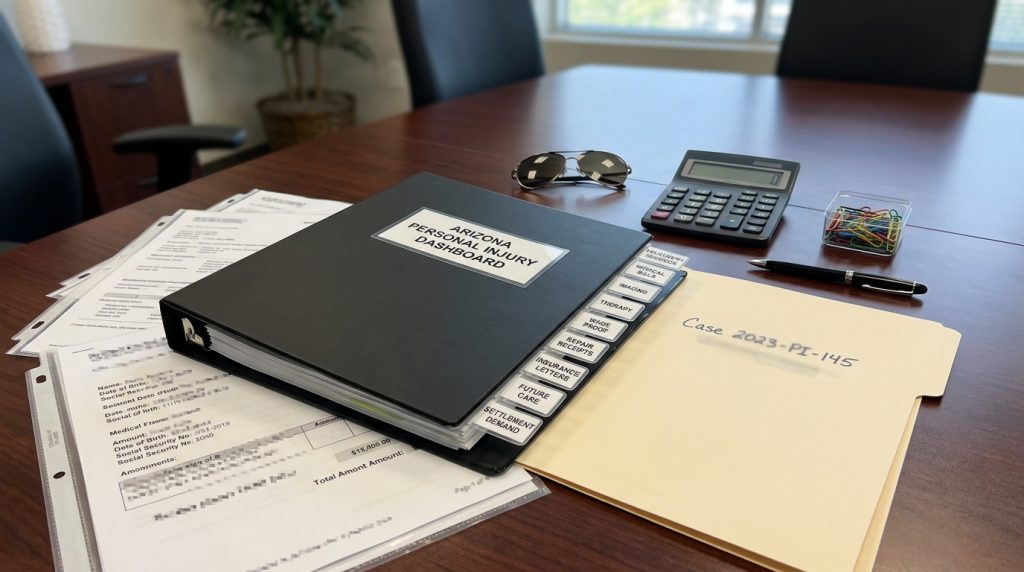
Track 6: Medical Bills, Records, and Wage Proof
Even after treatment slows down, the case may not be ready immediately. Medical providers, billing offices, imaging centers, therapy providers, health insurers, employers, and lienholders may produce documents on different timelines.
Important records include:
- Medical records
- Medical bills
- Imaging reports
- Prescription receipts
- Referral paperwork
- Therapy attendance records
- Work restriction notes
- Future-care recommendations
- Health insurance payment explanations
- Provider balances
- Pay stubs
- Timesheets
- Employer letters
- Tax records
- Contractor invoices
- Repair estimates
- Rental receipts
- Towing bills
- Out-of-pocket receipts
A case can slow down when records are missing, bills are incomplete, wage loss is undocumented, or providers send inconsistent information. It is usually better to build the case from accurate records than negotiate using guesses.
Track 7: The Settlement Demand
A settlement demand is usually prepared after enough evidence is available to evaluate the claim.
A strong demand package may include:
- Incident summary
- Liability evidence
- Crash report or incident report
- Scene photos
- Vehicle damage photos
- Hazard photos
- Witness information
- Medical records
- Medical bills
- Treatment timeline
- Wage-loss documents
- Repair or property-damage records
- Future-care information
- Policy-limit concerns
- Settlement demand amount
- Response deadline
The demand track may slow down if medical treatment is ongoing, bills are missing, wage records are incomplete, crash reports are delayed, witnesses need follow-up, camera footage must be requested, coverage is unclear, a commercial vehicle is involved, or a public entity may be connected.
A complete demand package can make negotiation more efficient because it gives the insurer fewer reasons to request missing information.
Track 8: Settlement Negotiation
Negotiation may be short or lengthy depending on the dispute.
Settlement talks may move faster when:
- Fault is clear
- Medical treatment is complete
- Bills are organized
- Wage loss is documented
- Coverage is confirmed
- The insurer has complete records
- There are no major liens
- The release is straightforward
Negotiation may take longer when:
- Fault is disputed
- The insurer blames the injured person
- Medical treatment is ongoing
- Future care is uncertain
- The insurer disputes medical bills
- Prior injury arguments arise
- Witnesses are missing
- Camera footage must be preserved
- Policy limits are low
- Multiple insurers are involved
- A commercial vehicle was involved
- A rideshare vehicle was involved
- A public entity may be involved
Negotiation is not only about the settlement amount. It also involves proof, coverage, timing, release language, liens, and whether settlement would actually resolve the full case.
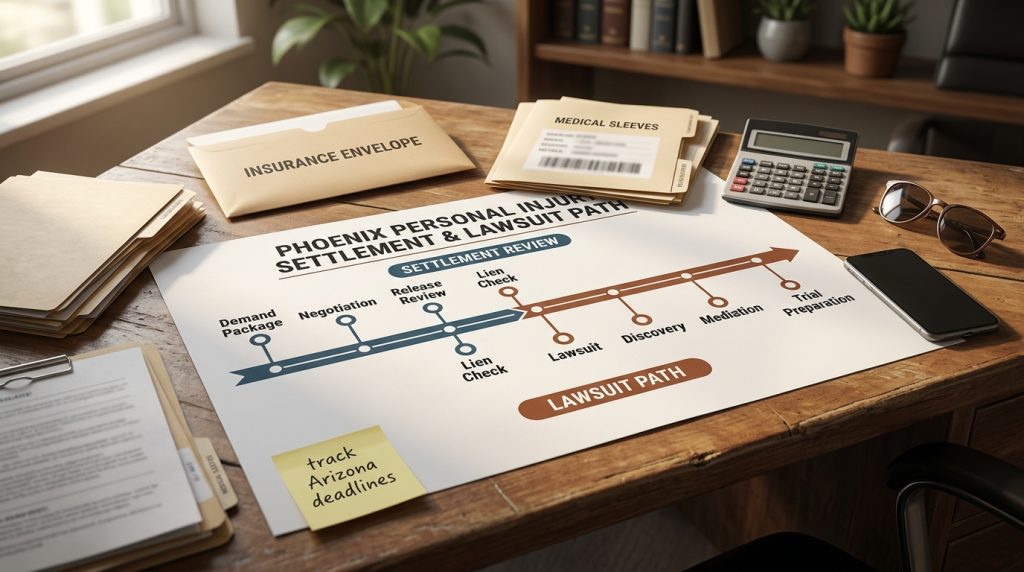
Track 9: Settlement Release Review
If a settlement is reached, the insurer will usually require a written release before payment.
Before signing, ask:
- Are all medical bills included?
- Is treatment complete?
- Is future care expected?
- Are lost wages included?
- Are repair or rental issues separate?
- Are liens or reimbursement claims possible?
- Does the release cover all claims?
- Does it release only one party or multiple parties?
- Does it include unknown injuries?
- Does it affect uninsured or underinsured motorist claims?
- Does it affect property damage claims?
- Is the payment final?
A settlement release can end the case. Once signed, you may not be able to return later for additional medical bills, lost wages, or future symptoms.
Track 10: Liens and Reimbursement Issues
A settlement agreement does not always mean payment is ready to distribute immediately.
The final stage may involve:
- Health insurance reimbursement
- Medicare or Medicaid issues
- Hospital liens
- Provider balances
- Letter-of-protection balances
- Workers’ compensation reimbursement
- Medical bill reductions
- Case cost accounting, if represented
- Attorney fee accounting, if represented
- Settlement check processing
This stage can surprise people because the settlement amount and the final net distribution are not always the same.
A careful case review should identify liens and reimbursement issues before settlement whenever possible.
Track 11: When a Lawsuit Becomes Necessary
Many personal injury cases settle without trial. But a lawsuit may become necessary when settlement talks do not resolve the dispute.
A lawsuit may be needed if:
- The insurer denies liability
- The settlement offer is too low
- Fault is disputed
- Medical causation is disputed
- Policy limits are contested
- Multiple parties blame each other
- A commercial entity refuses records
- A public entity may be involved
- Evidence must be obtained formally
- The deadline is approaching
- Settlement talks stall
Filing a lawsuit does not mean the case will definitely go to trial. Many cases continue to negotiate after suit is filed.
Track 12: Discovery
Discovery is the formal information-exchange stage after a lawsuit is filed.
Discovery may include:
- Written questions
- Requests for documents
- Medical-record exchanges
- Insurance-policy information
- Photos and video production
- Witness identification
- Expert disclosures
- Depositions
- Vehicle or property inspections
- Company records in commercial vehicle cases
- Maintenance records in unsafe-property cases
Discovery can take time because both sides may request records, object to requests, schedule depositions, review medical history, consult experts, and evaluate settlement again after more evidence is available.
Track 13: Mediation and Settlement Conferences
Mediation or a settlement conference may be used when both sides understand the evidence but still disagree about fault, damages, medical causation, policy limits, or settlement value.
A case may go to mediation before a lawsuit, during discovery, or closer to trial.
Mediation may:
- Resolve the case
- Narrow the dispute
- Identify missing records
- Clarify policy-limit issues
- Encourage renewed negotiation
- Show that more discovery is needed
If mediation succeeds, the case may move into release review, lien resolution, and payment. If mediation fails, the case may continue toward trial preparation.
Track 14: Trial Preparation
Trial preparation can extend the timeline, especially in serious or disputed cases.
Trial preparation may involve:
- Final discovery
- Expert witness preparation
- Medical exhibit preparation
- Motions
- Pretrial statements
- Witness preparation
- Deposition review
- Settlement conferences
- Jury instructions
- Trial scheduling
Court schedules, continuances, expert availability, motion practice, and settlement discussions can all affect how long this stage takes.
Many cases still settle before trial. But preparing a case for trial can be necessary when settlement offers do not reflect the evidence.
Arizona Deadlines That Can Affect the Timeline
Arizona injury cases are time-sensitive. In many cases, injury-to-person actions must be commenced and prosecuted within two years after the cause of action accrues under Arizona Revised Statutes Section 12-542.
That does not mean anyone should wait two years to act. Evidence can disappear long before the legal deadline. Camera footage may be overwritten, vehicles may be repaired, witnesses may move, memories may fade, and medical records may become harder to gather.
Some cases involve shorter rules. Under Arizona Revised Statutes Section 12-821.01, people with claims against a public entity, public school, or public employee must file a notice of claim with an authorized person within 180 days after the cause of action accrues. Arizona Revised Statutes Section 12-821 also requires actions against public entities or public employees to be brought within one year after the cause of action accrues.
These rules may matter if the injury involved a city vehicle, state vehicle, public employee, public school vehicle, public roadway condition, public building, traffic signal issue, public transit issue, or other public-entity question.
Arizona law also addresses comparative negligence. Under Arizona Revised Statutes Section 12-2505, a claimant’s action is not barred by comparative negligence, but damages may be reduced in proportion to the claimant’s relative degree of fault.
Because deadline and fault rules can affect case value and leverage, timing should be reviewed early.
Phoenix Case Settings That May Take Longer
The setting of the accident can affect how long the case takes.
Freeways, Loops, and Ramps
Crashes on I-10, I-17, Loop 101, Loop 202, State Route 51, US 60, and nearby ramps may involve high speeds, multi-vehicle impacts, lane-change disputes, hit-and-run drivers, and serious injuries.
These cases may take longer because fault, damages, and available coverage may require more records.
Downtown, Airport, Campus, and Event-Area Crashes
Dense areas may involve rideshare pickups, pedestrians, scooters, delivery vehicles, buses, parking garages, hotels, airport shuttles, and business cameras.
These cases may require camera requests, trip records, incident reports, and detailed location evidence.
Parking Lots, Apartments, Stores, and Restaurants
Parking-lot and property-adjacent claims may involve unclear right-of-way, backing vehicles, poor lighting, spills, broken pavement, missing warnings, or surveillance footage.
These cases may slow down if property owners delay incident reports, video evidence, maintenance records, or insurance information.
Truck, Commercial, and Delivery Vehicle Cases
Commercial vehicle cases may require company records, maintenance records, driver files, dispatch logs, delivery documents, electronic data, and multiple insurance policies.
These cases often take longer than standard passenger-car claims because there may be more evidence, more insurers, and more parties.
Phoenix’s Road Safety Action Plan includes a data-evaluation method and High Injury Network that identifies problem locations and prioritizes safety solutions. That local safety context does not prove fault in a specific case, but it does reinforce why serious crash evidence, roadway context, and location details can matter.
What Can Make an Arizona Personal Injury Case Move Faster?
Some factors can help the case move more efficiently.
Helpful steps include:
- Getting medical care promptly
- Following treatment instructions
- Keeping appointments
- Saving medical records and bills
- Photographing the scene and damage
- Preserving witness information
- Tracking the crash or incident report
- Keeping an insurance call log
- Documenting wage loss
- Saving repair and rental records
- Avoiding contradictory statements
- Identifying all insurance coverage early
- Asking about liens before settlement
- Reviewing release language carefully
- Tracking Arizona deadlines from the beginning
A case may still take time, but organized proof reduces avoidable delay.
What Can Slow an Arizona Personal Injury Case Down?
Common delay factors include:
- Ongoing medical treatment
- Surgery recommendations
- Future-care uncertainty
- Missing medical records
- Missing bills
- Treatment gaps
- Disputed fault
- Comparative-fault arguments
- Witness problems
- Missing camera footage
- Low policy limits
- Uninsured or underinsured drivers
- Hit-and-run crashes
- Commercial vehicle records
- Rideshare insurance issues
- Multiple injured people
- Liens and reimbursement claims
- Public-entity involvement
- Litigation
- Disputes over release language
- Court scheduling
A slow case is not always a bad case. Sometimes the timeline is longer because the injury and evidence need to be understood fully. The problem is delay without a plan.
How to Know Whether Your Case Is Moving or Stuck
Ask these questions:
- Is medical treatment still ongoing?
- Are future-care needs clear?
- Are medical records complete?
- Are bills complete?
- Has the crash or incident report been obtained?
- Is fault disputed?
- Has the insurer confirmed coverage?
- Are policy limits known?
- Are liens identified?
- Has a demand package been sent?
- Has the insurer responded?
- Is the offer supported by the evidence?
- Are Arizona deadline risks being tracked?
- Has release language been reviewed?
- If a lawsuit was filed, is discovery moving?
If most answers are unclear, the case may not be ready for resolution yet. If the same missing issue remains unresolved for a long time, the case may need a clearer action plan.
Phoenix Personal Injury Case Timeline Checklist
Use this checklist to track progress.
Early Case Stage
- Accident reported
- Medical care started
- Photos saved
- Witnesses identified
- Camera locations noted
- Crash or incident report requested
- Insurance claim opened
- Adjuster contact saved
Medical Documentation Stage
- Treatment plan known
- Imaging completed, if needed
- Specialist records collected
- Therapy records collected
- Work restrictions saved
- Medical bills requested
- Future-care questions reviewed
Evidence Stage
- Crash or incident report obtained
- Scene photos saved
- Witness details preserved
- Camera requests identified
- Vehicle damage or hazard documented
- Repair and rental records saved
- Wage-loss proof collected
Demand Stage
- Liability evidence organized
- Medical records complete
- Wage loss documented
- Policy limits reviewed
- Demand package prepared
- Response deadline tracked
Negotiation Stage
- Insurer response received
- Missing information addressed
- Counteroffers tracked
- Liens reviewed
- Release language reviewed
- Settlement terms confirmed
Lawsuit Stage
- Complaint filed, if needed
- Defendant served
- Discovery exchanged
- Depositions scheduled
- Expert issues reviewed
- Mediation considered
- Trial preparation tracked
Closing Stage
- Release reviewed before signing
- Liens or reimbursement addressed
- Payment timing confirmed
- Final settlement statement reviewed
- Case documents saved
FAQ
How long do personal injury cases take in Arizona?
It depends on the injury, treatment timeline, evidence, fault dispute, insurance coverage, settlement negotiations, liens, release paperwork, and whether a lawsuit is needed. Some claims may resolve in months after records are complete, while serious or disputed cases can take much longer.
Why does medical treatment affect the case timeline?
A case may be undervalued if it settles before treatment is complete or future care is known. Medical records, bills, restrictions, and prognosis help establish value.
How do I get a Phoenix traffic crash record?
Phoenix Police public-record materials list traffic crash records among request types and direct users to the Police Public Record Request portal. ADOT also provides Arizona Crash Report forms and resources.
Does every personal injury case go to trial?
No. Many cases settle before trial. Some settle before a lawsuit is filed, while others settle during litigation, after discovery, at mediation, or shortly before trial.
Does filing a lawsuit mean settlement is impossible?
No. Filing a lawsuit does not end settlement discussions. Litigation can create a formal process for exchanging evidence and may lead to settlement later.
Should I settle before I finish medical treatment?
Be careful. A settlement release may end the case. Before signing, consider whether treatment is complete, future care is expected, all bills are included, and wage losses are known.
What slows down an Arizona personal injury case?
Common delays include disputed fault, ongoing treatment, missing records, policy-limit issues, liens, uninsured drivers, commercial vehicle records, rideshare claims, litigation, and disagreements over release language.
How long do I have to file a personal injury lawsuit in Arizona?
In many Arizona injury cases, the general deadline is two years after the cause of action accrues. Some claims may involve shorter notice rules or different deadlines, especially if a public entity, public school, or public employee may be involved.
What if the insurer says I was partly at fault?
Arizona comparative-negligence rules can reduce damages according to the claimant’s relative degree of fault. Evidence is especially important when fault is disputed.
Is this article legal advice?
No. This article is for general informational purposes only. Anyone dealing with a specific accident, injury case, settlement offer, release, or deadline should speak with a qualified legal professional about their situation.
Final Thoughts
An Arizona personal injury case takes as long as the moving tracks require. Medical care, official reports, evidence preservation, insurance review, demand preparation, settlement negotiation, release review, liens, litigation, mediation, trial preparation, and Arizona deadlines all affect the timeline.
The goal is not to rush. The goal is to keep the case moving with a plan. Preserve evidence, follow medical care, organize records, track insurance communication, review coverage, identify liens, watch deadlines, and avoid signing a release before the full case is understood.