

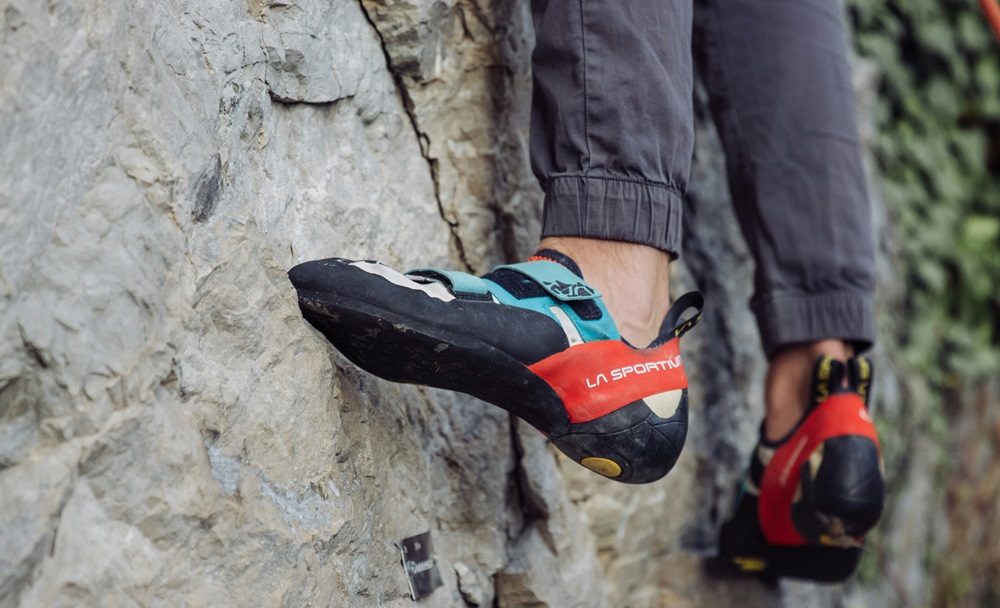
Loose rock climbing shoes feel fine at the gym, until you’re 20 feet up a slab and your foot quietly slides off a dime edge.
Studies on climbing performance show that shoe fit accounts for nearly 30% of footwork precision on technical terrain.
What feels “just snug enough” on flat ground can cost you a move – or a send – on the wrong route type.
How Do Loose Shoes Actually Affect Slab Climbing?
On slab, loose shoes are immediately punishing. Slab climbing relies almost entirely on friction, which means the rubber on your shoe needs to stay in full, even contact with the rock surface. When there’s extra space inside the shoe – even a millimeter or two – your foot shifts slightly with each step, and that kills friction consistency.
The heel is especially vulnerable. On low-angle slab moves, your heel often carries a lot of weight. If your heel lifts even slightly inside the shoe during a smear, you lose the rear contact point and your whole foot starts to rotate. That rotation is usually what causes a slab slip.
A good test: stand on a slightly inclined surface barefoot, then try the same surface with a loose shoe. The shoe actually makes it harder because it introduces a layer of instability between your foot and the rubber.
On slab, your shoe fit is part of your friction surface. If the shoe moves, you move.
What Does a Loose Fit Do to Overhang Performance?
On overhang terrain, the problem shifts from friction to tension. Your toes need to actively press into the front of the shoe to generate force on small holds. If there’s dead space between your toes and the toe box, that force transfer becomes inefficient.
Think of it this way: pulling on a crimp while your toes are floating inside a loose shoe is like trying to punch while wearing a glove three sizes too big. The movement exists, but the power delivery is weak.
Heel hooks suffer the most. A heel hook on steep terrain requires your shoe’s heel cup to lock into place on a hold. Any looseness in the heel means the shoe can pivot, which dumps the hook and can throw your whole body off the wall.
Research from climbing biomechanics studies suggests that heel cup contact area drops significantly with even 5mm of excess heel space – reducing effective hook force by a measurable margin.
Toe hooks are similar. You need the rand (the rubber wrapping around the toe) to press firmly against the hold. Loose shoes mean the rand doesn’t seat properly.
On overhang, shoe fit is about force transfer, not just comfort.
So How Do You Actually Tell If Your Shoes Are Too Loose?
There are a few reliable signs, and they differ slightly by terrain type.
For slab, pay attention to what your heel does during a smear. If you feel any micro-movement – your heel lifting, shifting, or rotating inside the shoe – that’s too loose. You should feel like the shoe is part of your foot, not a container your foot is sitting in.
For overhang, check your toe position when standing on a small foothold. Your toes should be pressed forward and curved slightly, actively gripping through the rubber. If your toes feel flat or passive, the shoe has too much room.
Another honest test: put the shoes on and try to lift your heel while your toes stay pressed to the floor. In a properly fitted climbing shoe, this should feel almost impossible. If your heel lifts easily, the shoe is too long, too wide, or both.
A 2019 report from a sports podiatry journal noted that climbers wearing shoes with more than 5mm of toe box space showed 22% more footwork errors on technical routes compared to those in properly fitted shoes.
Does Shoe Shape Matter as Much as Size?
Yes, and it’s something most people overlook when they’re buying. Shoe shape – flat, moderate, or aggressive – affects how tightly the upper wraps your foot in a given position.
Aggressive shoes (downturned, asymmetric) put your foot in a position that naturally pre-loads your toes toward the front of the shoe. Even with slightly more volume, your toes stay engaged. This is why aggressive shoes tend to mask loose fit better on overhang.
Flat shoes don’t have that pre-load. On slab, a flat shoe in the right size performs well. But if that flat shoe is even slightly loose, you lose all the benefit of the design because the rubber isn’t in consistent contact.
The shape and the fit work together. One can’t compensate for the other being wrong.
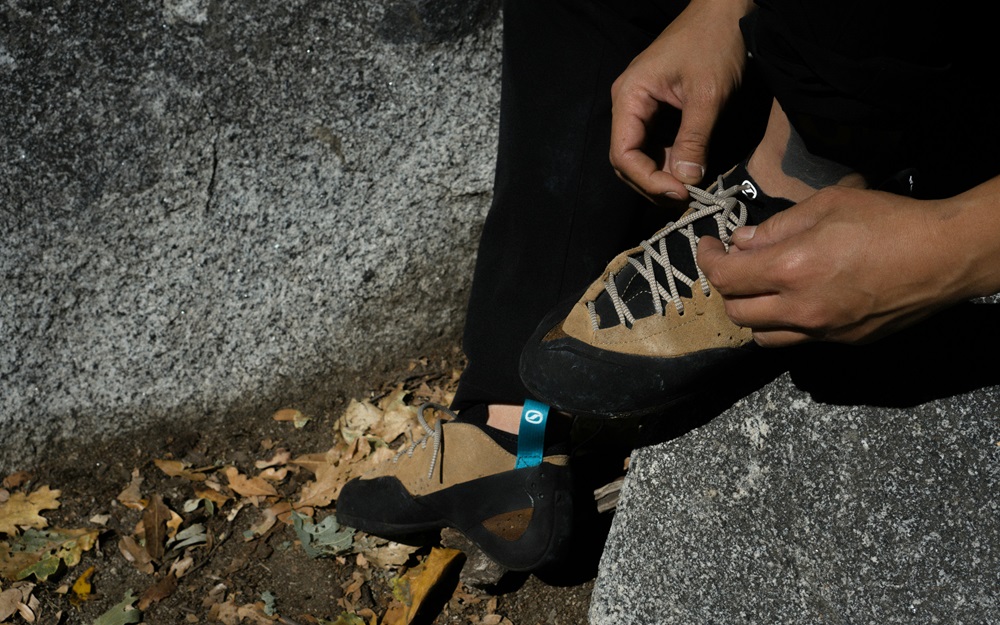
What’s the Right Amount of Snugness for Each Terrain?
For slab, you want your heel fully seated with zero lift, and your toes lightly touching the front of the shoe without curling. Your foot should feel held, not squeezed.
For overhang, your toes should be slightly curled and actively pressing forward. Your heel cup should feel locked. Some climbers go half a size down specifically for steep climbing, accepting more discomfort in exchange for better tension.
There’s no universal number. Body heat, time on the wall, and shoe material all affect fit. Leather shoes stretch significantly – sometimes a full size over time. Synthetic shoes stay closer to their original shape.
If you’re buying for slab, synthetic is safer because you can trust the fit won’t change.
Most experienced climbers own at least two pairs: one for slab, fitted more neutrally; one for overhangs, fitted aggressively tight.
FAQs
Can one pair of climbing shoes work well for both slab and overhang?
It can, but it’s a compromise. A shoe fitted tightly enough for overhang performance will be uncomfortable on long slab routes, and a shoe comfortable enough for slab will underperform on steep terrain. If you’re newer to climbing and own one pair, a moderate fit on a moderate shoe is the safest middle ground.
How much toe curl is normal in a well-fitted climbing shoe?
For flat and moderate shoes used on slab, very little curl – your toes should just graze the front. For aggressive shoes on overhang, more curl is expected and intentional. The curl creates tension that helps you pull on small footholds.
Do climbing shoes stretch, and does that make them loose over time?
Leather shoes can stretch up to a full size with regular use, especially in humid conditions or after prolonged wear. Synthetic shoes stretch very little. If you buy leather shoes and they feel fine right away, they’ll likely feel loose within a few months.
Should you size down for climbing shoes?
Most climbers size down from their street shoe size. For slab-focused climbing, half a size down is common. For aggressive overhang climbing, some climbers go a full size or more down, though this can cause pain during longer sessions. It depends on the shoe model, your foot shape, and your tolerance.
Is foot pain from tight climbing shoes normal?
Some discomfort is expected, especially with aggressive fits. But sharp pain, numbness, or pain that lingers after you take the shoes off isn’t something to ignore.
Long-term toe compression has been linked to bunion development and joint stress in climbers who consistently wear shoes that are too small. Fit tight, but not to the point of pain.