

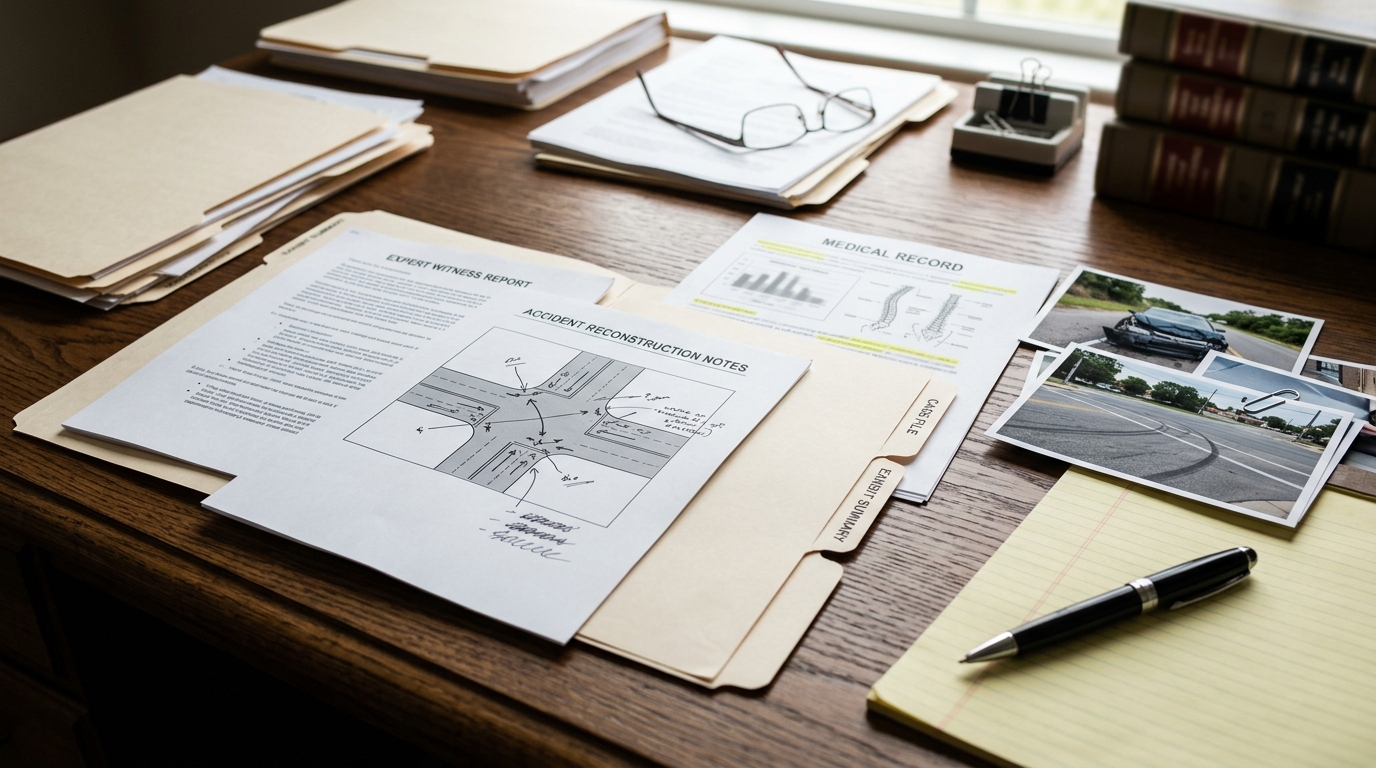
Expert witnesses can play an important role in New York personal injury claims when accident facts, injury causation, medical treatment, future care, lost income, safety rules, engineering issues, or long-term damages are disputed. An expert can help explain technical information in a way that supports liability, damages, settlement evaluation, or trial presentation. People reviewing injury claims may use a personal injury lawyer Long Island resource to understand how evidence, experts, insurance issues, and damages are generally evaluated.
Quick Answer
An expert witness supports a New York personal injury claim by explaining specialized issues that ordinary witnesses may not be able to evaluate. Depending on the case, experts may address accident reconstruction, medical causation, injury severity, future care, workplace safety, property hazards, trucking rules, economic losses, vocational limitations, nursing home care, boating safety, or engineering defects. Expert opinions are usually strongest when they are based on reliable methods, complete records, proper qualifications, and facts supported by evidence.
Key Takeaways
- Expert witnesses may help explain technical issues involving liability, injury causation, medical treatment, permanency, future care, wage loss, or safety standards.
- CPLR 3101(d)(1)(i) addresses expert disclosure in New York litigation, including disclosure of the expert’s subject matter, opinions, qualifications, and grounds for the opinion when requested.
- CPLR 4515 addresses the form of expert opinion testimony and permits expert opinion testimony without requiring every question to be hypothetical unless the court orders otherwise.
- New York continues to use the Frye standard for novel scientific evidence, which looks to general acceptance in the relevant scientific community. New York Courts
- Expert witnesses do not replace facts. Their opinions are usually only as strong as the records, inspections, testing, medical evidence, and assumptions they rely on.
- New York Courts lists three years for many car accident, slip and fall, and negligence-based personal injury claims, but public entity, wrongful death, no-fault, and other matters may involve different timing rules. New York Courts
- Claims involving public corporations may require a notice of claim within 90 days when notice is required under General Municipal Law § 50-e. NYSenate.gov
What Is an Expert Witness?
An expert witness is someone with specialized knowledge, training, education, skill, or experience who may help explain an issue that requires more than ordinary observation. In a personal injury claim, an expert may review records, inspect evidence, apply professional methods, prepare opinions, write reports, testify at deposition, or testify at trial.
Expert witnesses may be used to explain:
- How an accident happened
- Whether a safety rule was violated
- Whether a medical condition was caused by the accident
- Whether treatment was reasonable and necessary
- Whether an injury is permanent
- Whether future care is likely
- Whether a person can return to work
- How much future income may be lost
- Whether a property condition was unsafe
- Whether a commercial driver or company followed safety practices
- Whether nursing home care met accepted standards
- Whether a product, vehicle, vessel, or structure failed
Experts are most useful when a claim involves technical questions that need professional explanation.
Expert Witnesses vs. Fact Witnesses
A fact witness explains what they personally saw, heard, did, or experienced. An expert witness gives opinions based on specialized knowledge and evidence.
Fact witnesses may include:
- The injured person
- Drivers
- Passengers
- Bystanders
- Store employees
- Property managers
- Coworkers
- Family members
- First responders
- Medical providers who treated the person
Expert witnesses may include:
- Accident reconstruction experts
- Medical experts
- Engineers
- Safety experts
- Economists
- Vocational experts
- Life care planners
- Trucking safety experts
- Construction safety experts
- Nursing home care experts
- Boating safety experts
- Human factors experts
A strong claim may use both fact witnesses and expert witnesses. Fact witnesses explain what happened. Experts may explain what those facts mean.
Why Expert Witnesses Matter in Personal Injury Claims
Expert witnesses can help when the insurance company, defense attorney, or opposing party disputes important issues. Expert opinions may help connect evidence to legal and medical questions.
Experts may help explain:
- Why the accident happened
- Whether the defendant’s conduct was unsafe
- Whether the injury was caused by the accident
- Whether a pre-existing condition was aggravated
- Whether future medical care is needed
- Whether the injured person can return to prior work
- Whether future income loss is likely
- Whether the accident caused permanent limitations
- Whether the defense theory is incomplete or unsupported
A broader guide to evidence for personal injury claims can help explain why expert opinions usually need to be supported by records, reports, photos, medical documentation, witness statements, and physical evidence.
When an Expert Witness May Be Needed
Not every personal injury claim needs an expert witness. Some claims involve clear facts, limited injuries, and straightforward damages. Other claims require expert review because the issues are technical, disputed, or high-value.
An expert may be useful when:
- Fault is disputed.
- Injuries are serious.
- Medical causation is challenged.
- Pre-existing conditions are involved.
- Future care is expected.
- Surgery or permanent impairment is claimed.
- Lost earning capacity is disputed.
- A commercial truck, construction site, or workplace is involved.
- A property defect requires engineering review.
- Nursing home records need professional interpretation.
- Boating or watercraft rules are involved.
- The case may proceed to litigation or trial.
The need for an expert depends on the claim facts, evidence, injuries, and disputed issues.
Accident Reconstruction Experts
An accident reconstruction expert may help explain how a crash, fall, collision, or impact occurred. These experts often review physical evidence, photos, vehicle damage, roadway markings, measurements, statements, diagrams, and digital data.
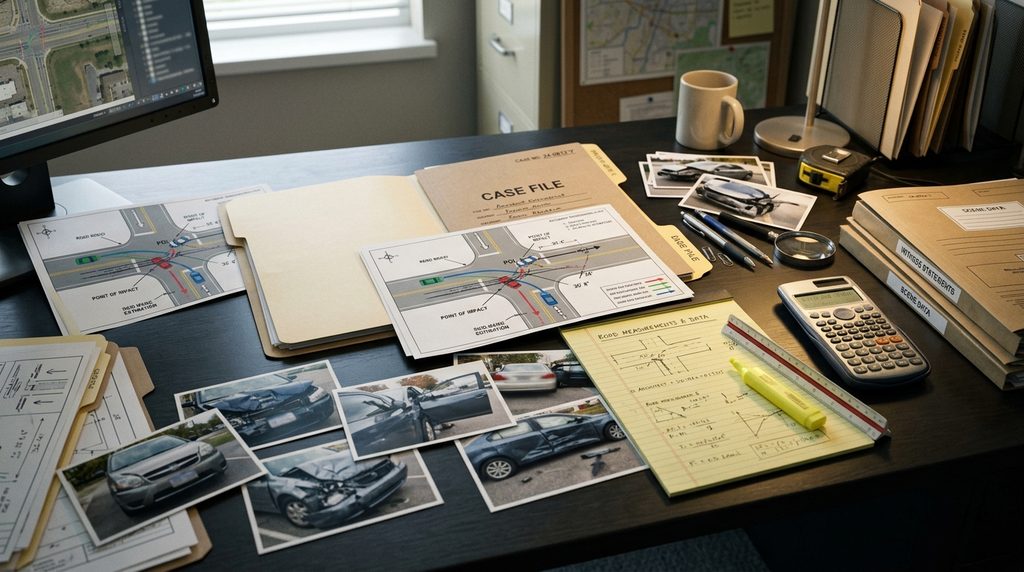
An accident reconstruction expert may review:
- Vehicle speeds
- Impact angles
- Skid marks
- Vehicle crush damage
- Roadway design
- Traffic signal timing
- Weather and visibility
- Dashcam footage
- Event data recorder information
- Vehicle resting positions
- Pedestrian or bicycle movement
- Commercial vehicle records
Accident reconstruction may be important in car accidents, truck accidents, motorcycle crashes, pedestrian collisions, bicycle crashes, boating collisions, and serious premises or workplace incidents.
Medical Experts
Medical experts may help explain diagnosis, causation, treatment, permanency, future care, and the connection between the accident and the injury. In many personal injury claims, medical causation is one of the most disputed issues.
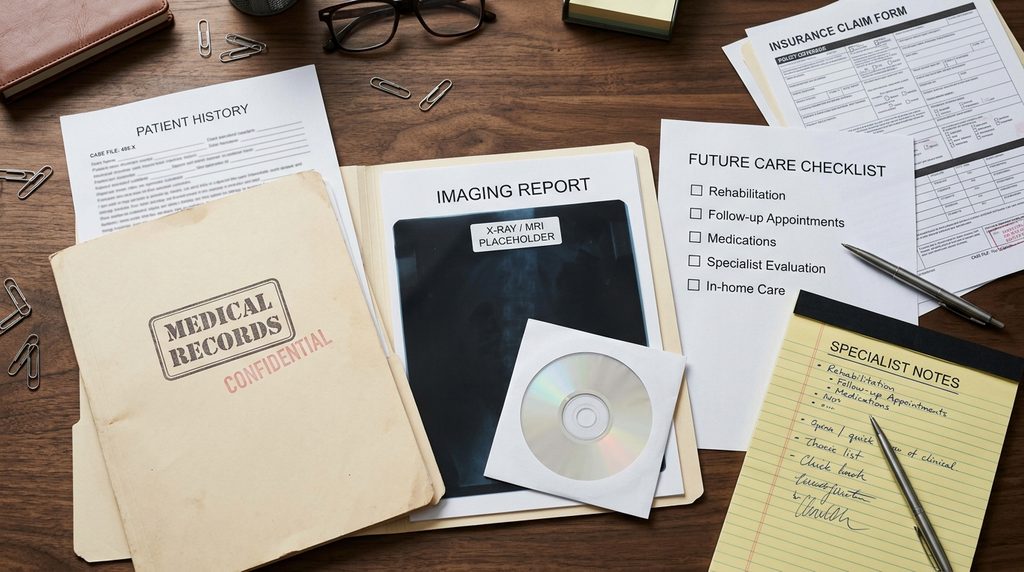
Medical experts may address:
- Whether the accident caused the injury
- Whether the accident aggravated a pre-existing condition
- Whether treatment was reasonable
- Whether surgery was necessary
- Whether symptoms are permanent
- Whether future treatment is expected
- Whether work restrictions are medically supported
- Whether imaging findings are traumatic or degenerative
- Whether pain complaints match the diagnosis
Medical opinions can be especially important when the injured person has prior injuries, degenerative findings, delayed symptoms, treatment gaps, or long-term limitations.
Treating Doctors as Expert Witnesses
Treating doctors may serve as important witnesses because they examined the injured person, diagnosed the injury, ordered treatment, reviewed imaging, and followed recovery over time. Depending on the case, a treating provider may testify about medical facts, diagnosis, causation, treatment, and prognosis.
Treating doctors may discuss:
- Symptoms reported after the accident
- Diagnosis
- Treatment provided
- Imaging findings
- Surgery
- Physical restrictions
- Recovery progress
- Permanent limitations
- Future care recommendations
However, a treating doctor may not always cover every expert issue needed in a claim. Some cases may require additional medical experts, specialists, or independent analysis.
Engineering Experts
Engineering experts may be useful when the claim involves unsafe structures, defective products, roadway design, building hazards, equipment failures, stair defects, railing issues, machinery accidents, or structural conditions.
Engineering review may involve:
- Building code issues
- Stair dimensions
- Handrail placement
- Floor friction
- Lighting
- Sidewalk elevation changes
- Guardrail design
- Machine guarding
- Equipment failure
- Product design
- Vehicle or vessel components
- Structural defects
Engineering experts may be especially important in premises liability, construction accident, product liability, workplace injury, and marina or dock accident claims.
Human Factors Experts
Human factors experts may analyze how people perceive hazards, react to warnings, process visual information, avoid dangers, or respond to conditions in real-world settings.
Human factors issues may involve:
- Visibility
- Reaction time
- Warning signs
- Lighting
- Line of sight
- Driver perception
- Pedestrian perception
- Store layout
- Stairway visibility
- Distraction
- Hazard recognition
These experts may be helpful when the defense argues that the injured person should have seen or avoided a hazard.
Vocational Experts
A vocational expert may evaluate how an injury affects a person’s ability to work. This can be important when the injured person cannot return to the same job, needs modified work, or has reduced earning capacity.
Vocational experts may review:
- Job duties
- Work history
- Education
- Training
- Physical restrictions
- Transferable skills
- Labor market options
- Ability to return to prior employment
- Need for retraining
- Functional capacity evaluations
- Medical limitations
Vocational opinions may be useful when a person can technically work but can no longer perform the same type of job they had before the accident.
Economic Experts
Economic experts may help calculate financial losses. Their role is usually different from a vocational expert. A vocational expert may explain what work the injured person can do, while an economist may calculate the financial impact.
Economic experts may evaluate:
- Past lost wages
- Future lost earnings
- Lost benefits
- Pension losses
- Reduced earning capacity
- Inflation
- Work-life expectancy
- Household services
- Future medical costs, when supported by care plans
- Present value calculations
Economic expert review may be important in serious injury claims involving permanent work restrictions, disability, career loss, business income loss, or long-term care costs.
Life Care Planners
A life care planner may help estimate future medical and support needs for someone with serious or permanent injuries. These opinions usually need to be grounded in medical recommendations.
A life care plan may address:
- Future doctor visits
- Surgery
- Medication
- Therapy
- Medical equipment
- Home modifications
- Assistive devices
- Transportation needs
- Nursing care
- Attendant care
- Future diagnostic testing
- Long-term rehabilitation
Life care planning may be used in claims involving spinal injuries, brain injuries, amputations, severe fractures, burns, permanent mobility loss, catastrophic injuries, or serious nursing home negligence.
Construction Safety Experts
Construction accident claims often involve technical safety issues. A construction safety expert may review jobsite control, safety devices, fall protection, scaffolds, ladders, equipment, training, and contractor responsibilities.
A construction safety expert may review:
- Site safety plans
- Contractor roles
- Subcontractor responsibilities
- Scaffold setup
- Ladder placement
- Fall protection
- Equipment records
- Training records
- Safety meeting records
- Incident reports
- Photos of the jobsite
- Applicable safety standards
A construction accident attorney resource may help readers understand why jobsite evidence, safety records, medical proof, and expert review often overlap in worksite injury claims.
Trucking Safety Experts
Truck accident claims often involve commercial rules, driver conduct, company policies, vehicle maintenance, hours of service, dispatch practices, cargo, and electronic logging records. A trucking safety expert may help explain whether the driver or company followed accepted safety practices.
Trucking expert review may involve:
- Driver qualification files
- Electronic logging data
- Hours of service issues
- Maintenance records
- Inspection records
- Dispatch records
- Cargo loading
- Driver training
- Company safety policies
- Federal safety standards
- Dashcam footage
- GPS data
A truck accident attorney resource may help explain why commercial vehicle cases often require evidence beyond a police report.
Premises Safety Experts
Premises liability claims may require expert review when the hazard involves building design, maintenance practices, snow and ice removal, floor safety, lighting, stairs, ramps, railings, or inspection procedures.
Premises safety experts may evaluate:
- Hazard visibility
- Walking surface conditions
- Floor friction
- Code compliance
- Lighting levels
- Stair dimensions
- Handrail placement
- Snow and ice procedures
- Inspection routines
- Maintenance logs
- Prior complaints
- Warning signs
A premises liability attorney resource may help explain why unsafe-property claims often depend on property control, notice, inspection history, and maintenance evidence.
Nursing Home Care Experts
Nursing home negligence claims often require review by professionals familiar with resident care standards, charting, care plans, fall risk, skin integrity, medication administration, hydration, nutrition, and supervision.
Nursing home experts may review:
- Care plans
- Nursing notes
- Medication records
- Fall risk assessments
- Pressure injury records
- Staffing records
- Nutrition records
- Hydration records
- Incident reports
- Hospital transfer records
- Facility policies
- Family communication notes
A nursing home negligence lawyer Long Island resource may help readers understand why facility records, medical records, care planning, and expert review can be important in these claims.
Boating and Marine Safety Experts
Boating accident claims may involve vessel operation, navigational rules, wake, lighting, weather, marina conditions, rental company conduct, maintenance, or safety equipment. A boating or marine safety expert may help explain technical issues.
Marine experts may review:
- Vessel condition
- Operator conduct
- Navigation rules
- Weather and visibility
- Wake behavior
- Dock or marina conditions
- Rental documents
- Charter boat procedures
- Safety equipment
- GPS data
- Maintenance records
- Accident reports
- Witness statements
A boating accident lawyer Long Island resource may help explain why vessel records, operator conduct, weather, marina records, and safety equipment may all affect claim review.
Dog Behavior and Animal Control Experts
Dog bite claims do not always require an expert, but expert review may be useful when the case involves disputed dog behavior, prior aggression, owner knowledge, training, restraint, or animal handling practices.
Dog-related expert review may involve:
- Prior bite history
- Aggression signs
- Leash or enclosure conditions
- Owner handling
- Training history
- Animal control records
- Witness statements
- Breed behavior arguments
- Property layout
- Warning signs
A dog bite lawyer resource may help explain why prior dog behavior, owner knowledge, medical records, and witness evidence may matter.
What Experts Review Before Giving Opinions
Expert opinions should be based on facts, records, inspection, testing, accepted methods, or reliable professional experience. An expert who lacks sufficient support may be challenged by the opposing side.
Experts may review:
- Accident reports
- Medical records
- Photos
- Videos
- Witness statements
- Deposition testimony
- Scene measurements
- Vehicle damage
- Property records
- Maintenance logs
- Safety policies
- Work records
- Wage records
- Imaging studies
- Medical bills
- Inspection findings
- Digital data
- Prior records
- Expert literature or standards
A strong expert opinion usually explains not only the conclusion, but also the facts and reasoning behind it.
Expert Disclosure in New York Litigation
When a personal injury claim enters litigation, expert disclosure rules may become important. CPLR 3101(d)(1)(i) provides that, upon request, a party must identify each person expected to testify as an expert at trial and disclose in reasonable detail the expert’s subject matter, the substance of facts and opinions, qualifications, and a summary of the grounds for the opinion.
Expert disclosure may help the parties understand:
- Who the expert is
- What topic the expert will address
- What opinions the expert may offer
- What facts support the opinion
- What qualifications the expert has
- What the grounds for the opinion are
Disclosure timing and requirements can vary depending on court orders, case type, trial schedule, and litigation posture.
Expert Opinion Testimony
CPLR 4515 addresses the form of expert opinion testimony in New York. Unless the court orders otherwise, questions calling for an expert opinion do not need to be hypothetical in form, and the expert may state the opinion and reasons without first specifying the data on which it is based. The statute also allows cross-examination about the data and criteria supporting the opinion.
This matters because an expert’s opinion is not usually accepted just because the expert states a conclusion. The opposing side may question the expert about assumptions, methods, records reviewed, missing evidence, and alternative explanations.
Scientific Reliability and Frye Issues
Some expert opinions involve scientific or technical methods that may be challenged. New York uses the Frye standard for novel scientific evidence, which asks whether the relevant techniques are generally accepted as reliable in the scientific community. New York courts also distinguish the general reliability of a method from whether the expert properly applied that method to the facts of the case. New York Courts
Frye-type issues may arise when a party challenges:
- A scientific method
- A testing technique
- A medical causation theory
- A biomechanical analysis
- A reconstruction method
- A forensic method
- A technical model
- A new or disputed scientific opinion
Not every expert opinion requires a Frye hearing. The issue depends on the opinion, method, challenge, and court’s ruling.
Experts During Settlement Negotiations
Experts are not only useful at trial. Their opinions may also help during settlement negotiations. A clear expert opinion can help show why liability is strong, why the injury was caused by the accident, or why future damages are significant.
Expert opinions may support settlement by explaining:
- Accident mechanics
- Fault
- Safety violations
- Medical causation
- Permanent impairment
- Future care
- Work restrictions
- Economic loss
- Reduced earning capacity
- Long-term pain and suffering
Publicly available personal injury case results may provide general context, although every claim depends on its own facts, evidence, injuries, expert opinions, insurance coverage, and applicable law.
Experts During Litigation and Trial
During litigation, experts may help prepare discovery, evaluate opposing evidence, respond to defense theories, prepare for depositions, and support trial presentation. At trial, an expert may explain technical issues to a judge or jury.
Expert trial roles may include:
- Explaining complex evidence
- Supporting liability theories
- Connecting injuries to the accident
- Explaining medical records
- Estimating future damages
- Rebutting defense expert opinions
- Supporting or challenging accident reconstruction
- Clarifying safety standards
- Explaining permanent limitations
- Calculating economic loss
An expert’s credibility, qualifications, methods, and ability to explain opinions clearly can affect how persuasive the testimony is.
Defense Experts and Independent Medical Examinations
Insurance companies and defense attorneys may use their own experts. In injury claims, these may include doctors, biomechanical experts, reconstruction experts, vocational experts, economists, engineers, or safety consultants.
Defense experts may argue:
- The accident did not cause the injury.
- The injury is from degeneration.
- Treatment was excessive.
- The person can return to work.
- Future care is not needed.
- The hazard was not dangerous.
- The defendant did not violate safety standards.
- The plaintiff was partly at fault.
- Claimed damages are too high.
A strong claim should anticipate potential defense opinions and respond with records, treating provider opinions, technical analysis, and well-supported expert review when needed.
Expert Witness Limitations
Experts can be helpful, but they are not magic. An expert cannot fix missing facts, weak causation, lack of documentation, or unsupported assumptions.
Expert opinions may be weakened by:
- Incomplete records
- Missing evidence
- Poor factual assumptions
- Lack of inspection
- Weak methodology
- Overstatement
- Ignoring contrary evidence
- Lack of qualifications
- Inconsistent testimony
- Bias concerns
- Failure to connect opinions to the case facts
The strongest expert opinions are careful, specific, supported, and consistent with the evidence.
Expert Costs and Case Value
Expert witnesses can be expensive. The decision to use an expert should consider the claim value, disputed issues, available evidence, insurance coverage, and litigation needs.
Expert costs may include:
- Record review
- Site inspection
- Testing
- Written reports
- Deposition preparation
- Deposition testimony
- Trial preparation
- Trial testimony
- Travel time
- Supplemental opinions
In smaller claims, expert cost may outweigh the benefit. In serious or disputed claims, expert review may be necessary to prove liability or damages.
How Experts Affect Claim Value
Experts may affect claim value by helping prove disputed issues. They may also identify weaknesses that should be considered before settlement or trial.
Experts may affect value by supporting:
- Liability
- Causation
- Permanency
- Future medical care
- Work restrictions
- Lost earning capacity
- Safety violations
- Engineering defects
- Nursing home care failures
- Commercial vehicle safety issues
- Reduced quality of life
However, an expert opinion must still fit the evidence. A strong expert cannot guarantee a result.
Expert Witnesses and Deadlines
Expert review takes time. Records must be collected, evidence must be preserved, inspections may need to be scheduled, and reports may need to be prepared. Waiting too long can create problems if evidence disappears or court deadlines approach.
New York Courts lists three years for many car accident, slip and fall, and negligence-based personal injury claims. Wrongful death, public entity, no-fault, workers’ compensation, and other matters may involve different or shorter timing rules. New York Courts
Expert timing may also be affected by:
- Court scheduling orders
- Discovery deadlines
- Expert disclosure demands
- Deposition deadlines
- Motion deadlines
- Trial dates
- Public entity notice issues
- Evidence preservation needs
Claims involving public corporations may also require notice of claim within 90 days when General Municipal Law § 50-e applies.

Practical Expert Witness Review Chart
| Expert Type | What the Expert May Explain | Common Evidence Reviewed |
| Accident reconstruction expert | How a crash, collision, or impact occurred | Photos, reports, vehicle data, damage, measurements |
| Medical expert | Injury causation, treatment, permanency, future care | Medical records, imaging, surgery notes, prior records |
| Engineer | Structural defects, equipment failure, unsafe design | Inspections, codes, photos, maintenance records |
| Vocational expert | Ability to work and job limitations | Job duties, work restrictions, education, skills |
| Economist | Lost income and future earning capacity | Wage records, tax records, vocational opinions |
| Life care planner | Future care and support needs | Medical opinions, treatment plans, care costs |
| Safety expert | Whether safety practices were followed | Policies, training records, standards, incident reports |
| Nursing home expert | Care planning, supervision, charting, resident care | Care plans, nursing notes, medication records |
Common Mistakes With Expert Witnesses
Some mistakes can weaken expert value or delay a claim.
Common mistakes include:
- Waiting too long to preserve evidence
- Hiring an expert before records are complete
- Using an expert outside the relevant field
- Relying on assumptions instead of facts
- Ignoring prior medical records
- Not giving the expert key evidence
- Failing to inspect the scene or property when needed
- Overlooking defense expert arguments
- Missing expert disclosure deadlines
- Assuming expert testimony guarantees settlement
- Using an expert when the cost outweighs the claim value
- Not connecting expert opinions to damages
Expert review should be strategic and evidence-based.
How to Prepare Records for Expert Review
An expert can usually work more effectively when the claim file is organized. Missing or scattered records can slow the review and weaken the opinion.
Useful records may include:
- Accident reports
- Photos and videos
- Scene measurements
- Witness statements
- Medical records
- Medical bills
- Imaging studies
- Work records
- Wage loss proof
- Prior injury records
- Insurance letters
- Maintenance logs
- Safety policies
- Training records
- Deposition transcripts
- Digital data
- Court filings
Organizing evidence by date, category, and source can make expert review more efficient.
When Legal Guidance May Be Useful
Legal guidance may be useful when a personal injury claim involves serious injuries, disputed fault, complicated medical causation, future care, commercial vehicles, construction sites, unsafe property, nursing home records, boating accidents, or lost earning capacity. Expert review may also be useful when the insurer relies on a defense medical opinion or argues that the injury was unrelated to the accident.
An expert witness review may require accident reports, medical records, photos, videos, witness statements, expert qualifications, prior records, insurance correspondence, site inspection materials, wage records, and litigation deadlines.
People researching local support may review a Farmingdale legal office location when looking for Long Island personal injury claim information.
FAQs About Expert Witnesses in New York Personal Injury Claims
What does an expert witness do in a personal injury claim?
An expert witness explains technical or specialized issues, such as accident reconstruction, medical causation, injury permanency, future care, lost earning capacity, engineering defects, safety practices, or nursing home care standards.
Does every personal injury claim need an expert witness?
No. Some claims can be resolved with ordinary evidence, medical records, and witness statements. Expert witnesses are more common when fault, causation, future damages, safety standards, or technical issues are disputed.
What is expert disclosure in New York litigation?
CPLR 3101(d)(1)(i) addresses expert disclosure. Upon request, parties generally disclose the expert’s subject matter, substance of opinions, qualifications, and grounds for the opinion.
Can an expert help prove future damages?
Yes. Medical experts, life care planners, vocational experts, and economists may help explain future medical care, permanent restrictions, lost earning capacity, disability, and long-term financial impact when supported by evidence.
Can the defense use its own expert?
Yes. Defendants and insurers may use their own experts to dispute fault, injury causation, treatment, permanency, work restrictions, future care, or damages. A strong claim should anticipate and respond to those opinions with evidence.
Final Thoughts
Expert witnesses can support New York personal injury claims by explaining complex issues involving liability, medical causation, safety, future care, work limitations, and damages. The strongest expert opinions are based on reliable methods, complete records, proper qualifications, and evidence that fits the facts of the case. Expert review is most useful when it helps clarify disputed issues and supports a well-documented claim rather than replacing missing evidence.