

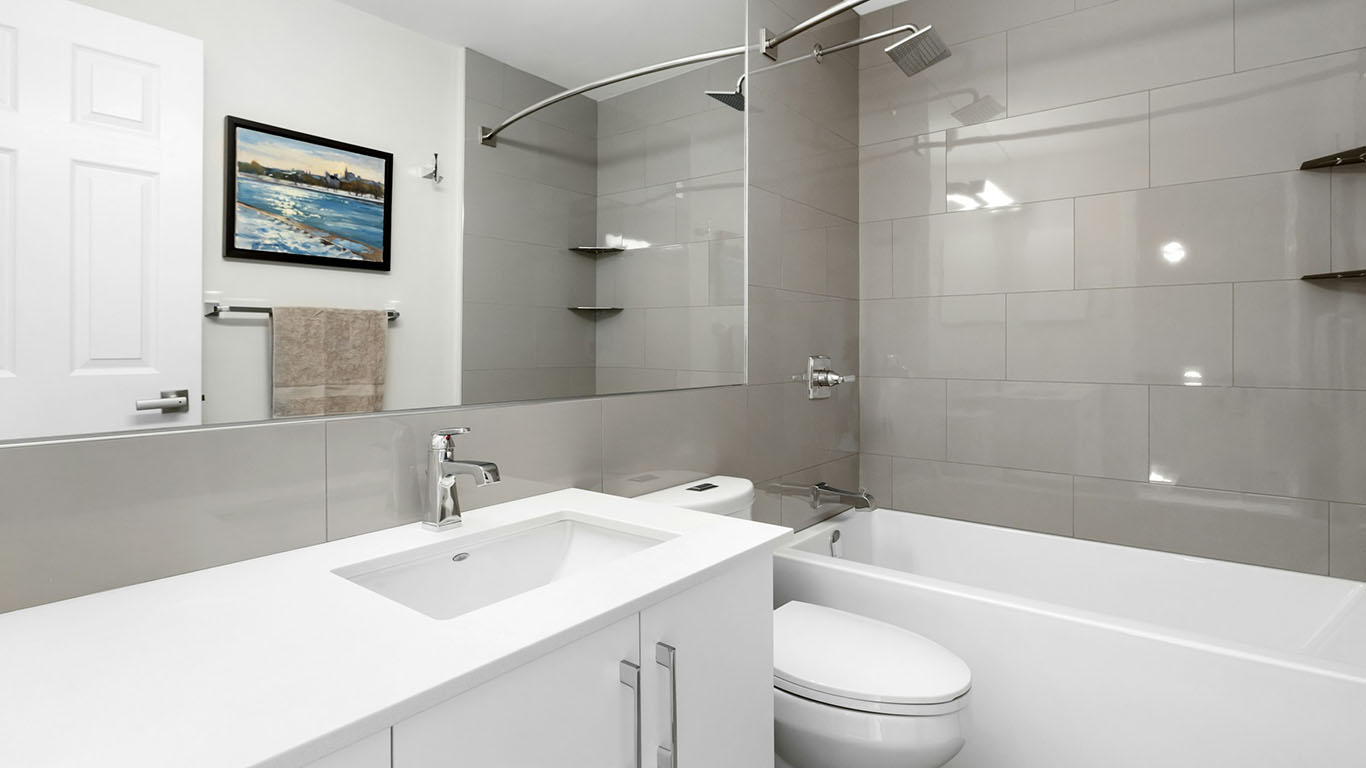
Bathrooms are still among the most demanding areas within residential premises. Wall surfaces are under stress due to constant moisture, change in temperature and daily use. Poor wall construction usually causes latent damages in behind the closed in places.
This damage eventually leads to repair which interferes with the normal life. When choosing tub panel walls, one has to pay close attention to the issue of moisture control, durability, and installation quality.
Homeowners are becoming more conscious of performance, rather than decorative look per se. Framing and plumbing should be covered with the help of wall systems. Ineffective selection of materials reduces the duration of renovations.
Wet Resistance Enquiries
There are the continuing risks of water exposure in the shower and tub enclosures. Walls should be effective in preventing penetration of liquids and vapors. Minor miniatures permit the movement of moisture behind surfaces.
Constant moisture is a good deterrent to the substrates and promotes the growth of molds. Good wall systems are used as continuous protective barriers. Joints and seams need to be designed in a reliable manner.
Conventional materials that have numerous grout lines foster failures. The points of exposure are minimalized by solid or engineered surfaces. Safe and durable bathrooms are guaranteed by reliable resistance.
Factors Of Performance Of The Material
The quality of the material defines endurance of repeated stress in the walls. Hard substances do not allow the absorption of water and swelling. Density of the material is consistent and this enhances resistance to cracking and warping.
Poor materials decay under the influence of cleaning agents. The coating applied on the surface should not discolor or wear off. Quality manufacturing makes the thickness and strength homogeneous. The mounted fixtures are fixed on the structural stability.
Long lasting materials will minimize maintenance requirements in the long run. Coming in looking good is not as important as being consistent in performance. The choice of materials has a direct impact on the life of renovations.
Installation Precision Significance
The quality of installation has a great impact on the efficiency and durability of systems. Wall substrates should be flat, stable and dry. Poor preparation leads to unequal pressure and premature death.
Tub and shower wall panels are installed properly in order to create a continuous waterproof enclosure. Attachment procedures should be very precise to the instructions of the manufactures.
Misalignment is a weakness of functionality and looks. Competent installation minimizes future repairs which are expensive. Quality workmanship conserves warranty. There is accuracy that protects the general bathroom performance.
Practicability Of Maintenance And Cleaning
The needs in maintenance have daily usability and the hygiene criteria. Covered smooth wall surfaces are resistant to the accumulation of soaps. Fewer seams restrict the growth of the mold and mildew.
Finishes that are resistant to chemicals can safely withstand frequent cleaning. Intensive maintenance should be provided on textured or porous surfaces. The systems with low maintenance promote routines of sanitation.
Minimal scrubbing saves on time and labor. Strong finish that lasts even after cleaning is done a number of times. Pressure-free maintenance gives better living environments. Easy care is a long-term value addition.
Design Integration Factors
Walls in bathroom have to blend in with the rest of the finishes and fixtures. The thickness of the panel influences the alignment of the trim and plumbing transitions. Lack of good integration produces gaps and visual discrepancies.
Architectural designs are neutral to give freedom of future changes. Unreasonably ambitious designs decrease the flexibility of the long term. Placement of seams has an effect on continuity of surfaces.
Equal measures enhance comfort in smaller areas. Spreading the construction with coordinated finishes will increase the perceived quality of the construction. Installation compatibility in Compatibility planning eliminates compatibility problems.
Conclusion
Bathroom wall systems are not only safeguarding the surfaces that are visible. The most important performance requirement is moisture management. Hard materials can be used to increase structural safety and service life.
This is done by precise installation to guarantee water resistance. Maintenance-free designs contribute to convenience and hygiene. Design compatibility enhances the general cohesion in the bathroom.
Informed planning lowers the risks and the long-term costs of repair. Homeowners enjoy performance-based types of selection. Wall systems have an impact on the day-to-day comfort.